From the field
The Building Envelope Is Part of Egypt's Summer Power Problem
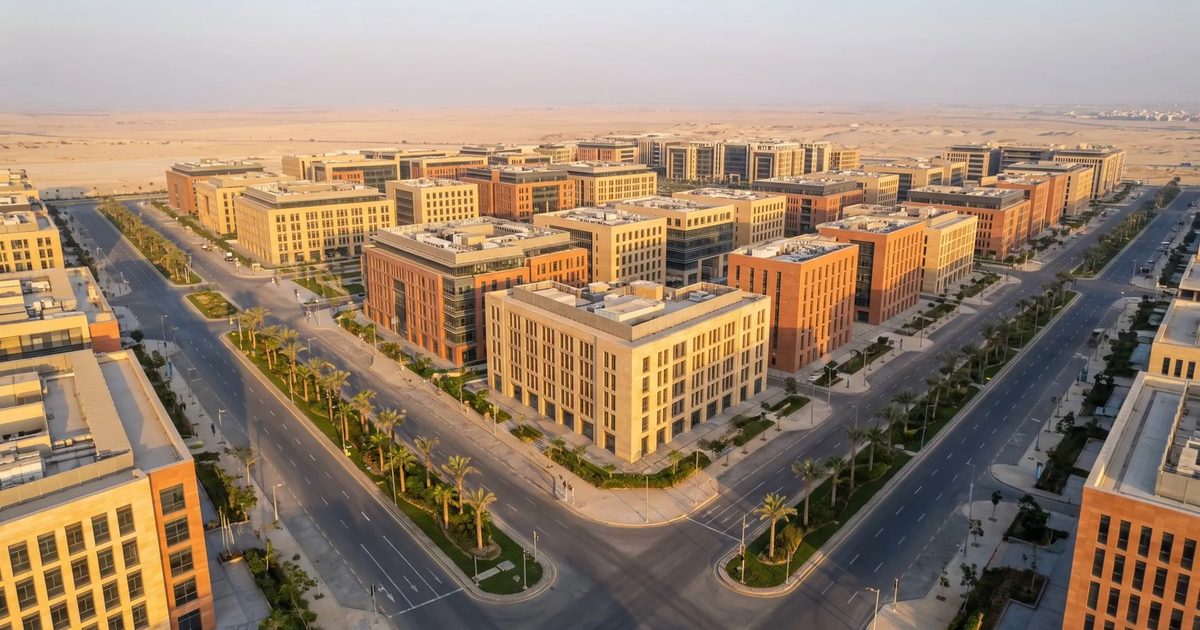
Air conditioning strains Egypt's grid every summer, and a building's envelope, not just its equipment, decides how much cooling it actually needs.
A number worth pausing on
In 2022, UNEP quoted Alaa Olama, a UNEP consultant and Head of the Egyptian District Cooling Code, saying that during the peak summer months, air conditioning accounts for 30% of Egypt's electric power.
That is not a marginal slice of the grid. It is close to a third of all electricity used in the country, concentrated in the months when temperatures and demand are both at their highest.
The figure comes from someone who works on cooling policy at a national level, which is why it is worth taking seriously rather than treating as a rough estimate. It sets the scale of the problem before any solution is discussed.
Where that demand actually comes from
Air conditioning load is not decided only by the size of the compressor installed. It is decided by how much heat has to be removed from a space, and that in turn depends on how much heat gets into the building in the first place.
A building gains heat from several directions at once: through the envelope, meaning walls, roof and facade, which absorb solar radiation and conduct heat inward; from inside the building itself, through people, lighting and equipment; and through ventilation and openings, where warm outside air enters and has to be cooled.
Each of these is a separate part of the total cooling demand, with its own design choices behind it. How much a facade absorbs depends on which way it faces, how much direct sun it gets during the day, and what material it is made of. A wall facing the sun for most of the afternoon behaves very differently from one that is mostly shaded, even on the same building.
What a ventilated facade changes, and what it does not
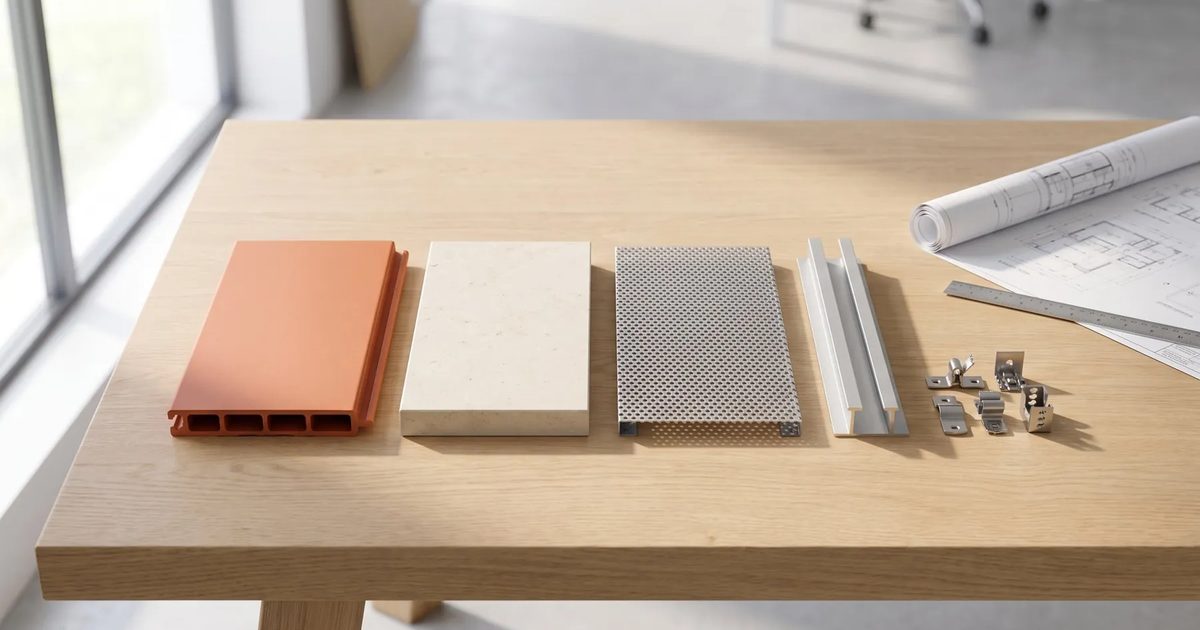
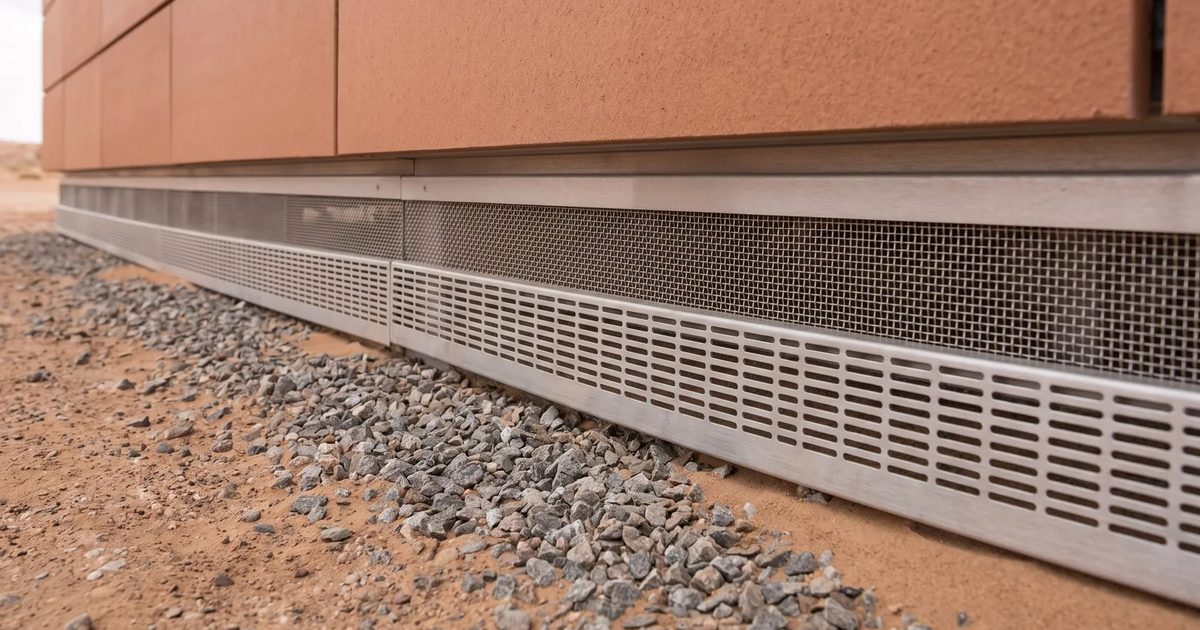
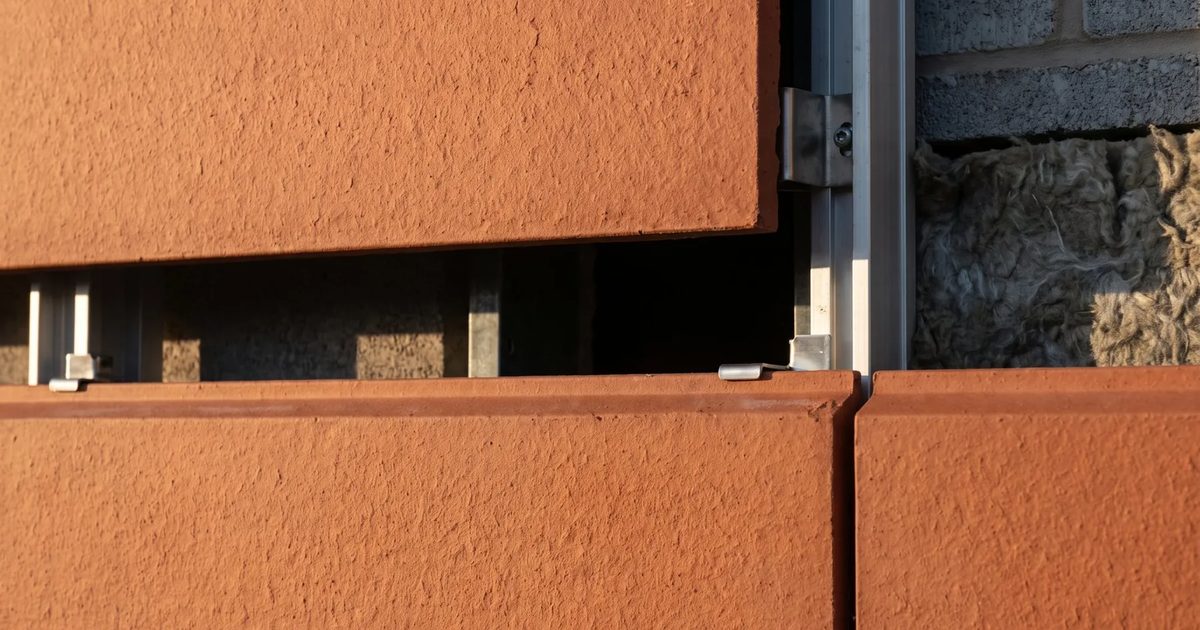
A ventilated facade is a wall system built with an outer cladding layer separated from the structural wall by an air cavity. Air moves through that cavity, driven by the heat itself, and carries away some of that heat before it reaches the structural wall behind it.
This reduces the cooling load coming through the envelope specifically, because less heat conducts through the wall into the interior. It does not touch the heat generated by people and equipment inside the building, or the heat that comes in through windows and ventilation, since those are separate parts of the total load with their own separate solutions.
So a ventilated facade is not a fix for a building's entire cooling bill. It addresses one identifiable part of it, the part that comes through the walls, and how much difference that makes depends on the building's design, orientation and the climate it sits in.
Why this adds up beyond a single building
The 30% figure describes a national grid at peak season, not one building. Air conditioning at that scale is made up of a large number of separate units and systems, each responding to the heat gain of the specific building it serves.
When the envelope's share of that heat gain is lower across many buildings, each individual air conditioning system has less of that portion of the load to remove. That is a design and construction question as much as an equipment question, and it is one reason envelope performance gets attention in a country where cooling already competes for a large share of available power during the summer.
Where EGY Green by Italy fits into this
EGY Green by Italy is being established to bring ventilated facade systems to the Egyptian market. It is part of EGY Holding, a group whose activities include construction, and its work draws on the group's construction experience in Italy.
The company is being set up specifically around this envelope technology, rather than treating it as one product line among many, because the physics behind it, reducing heat gain through the wall before it becomes a cooling load, is the same physics behind the national figure UNEP quoted.
If you are working on a building in Egypt and want to understand how envelope choices affect cooling load before committing to a design, that is a conversation EGY Green by Italy is set up to have.
Back to the site