From the field
Terracotta, Stone or Aluminium: How a Façade Material Gets Chosen
A practical look at three cladding materials used in ventilated façades and what actually decides which one fits a given building.
Why it isn't a matter of taste
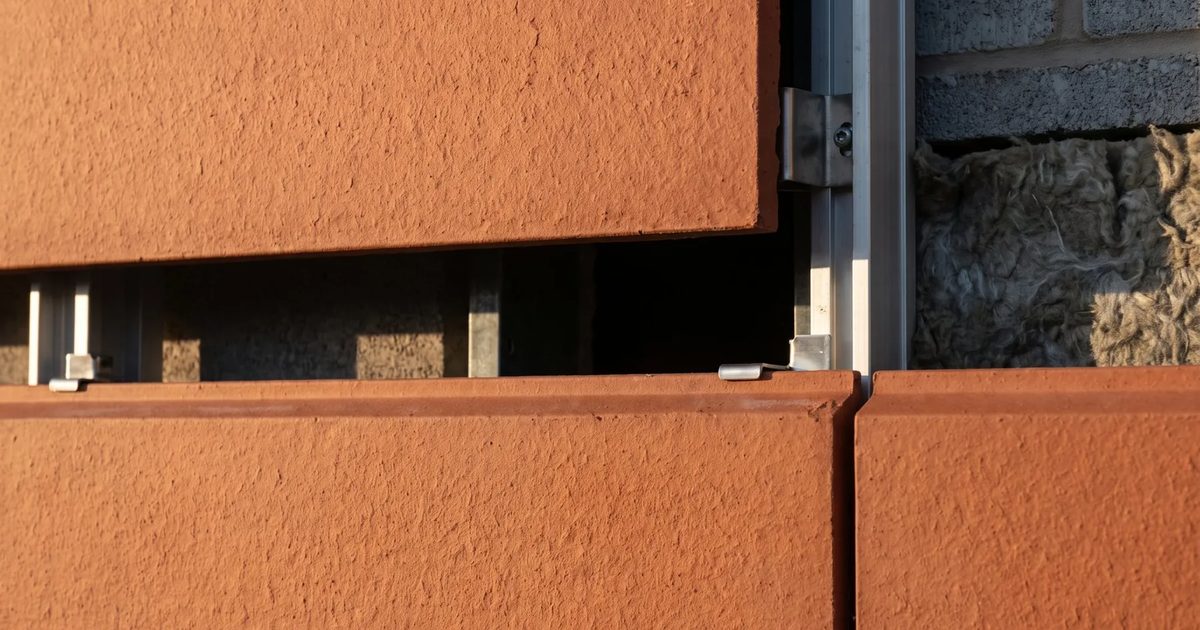
A ventilated façade works by placing the outer cladding a short distance from the structural wall, with an air gap in between. What changes from one project to another is the material used for that outer layer, and that choice has consequences well beyond how the building looks.
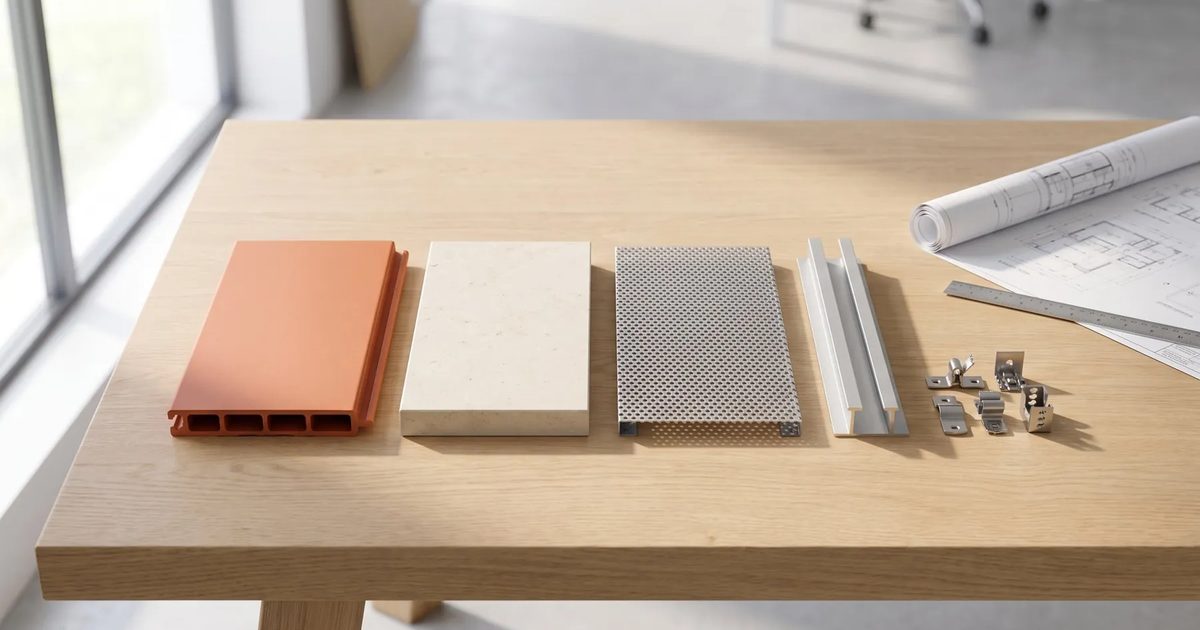
Three materials come up repeatedly in this kind of work: terracotta, natural stone, and perforated aluminium. Each behaves differently once it's on a wall, and each asks something different from the structure behind it.
None of them is simply better than the others. What fits one building can be the wrong answer for the one next door.
Terracotta: the local option
Terracotta has a character that reads as local. Its color and texture tend to sit naturally alongside the building traditions of the region where it's used, rather than looking imported.
It's also a durable material, built to hold up under sustained exposure to weather over the life of the building rather than just at handover.
For a building meant to belong to its surroundings, rather than stand apart from them, terracotta is often the material that gets a serious look.
Natural stone: presence for public buildings
Stone carries a sense of weight and permanence that other materials struggle to match. It's the material most often considered when a building needs to communicate something institutional, a courthouse, a museum, a headquarters.
That presence comes with a physical cost: stone is heavier than the alternatives, and that weight has to be accounted for in the structure and in how the panels are anchored and supported.
So the question with stone isn't only whether it fits the building's image, but whether the building's structure was designed with that load in mind.
Perforated aluminium: light and fast
Aluminium panels, especially perforated ones, are light. That lightness reduces the load on the structural wall and on the support system that holds the cladding in place, which in turn affects how quickly the façade can go up.
Perforation isn't purely decorative either. The pattern of holes can be used to manage how much light passes through and how air moves across the surface, which matters for buildings where ventilation or shading is part of the design brief.
Where installation speed and reduced structural load matter more than the sense of mass that stone gives, aluminium tends to be the material under discussion.
What actually decides it
In practice, the material is chosen per building, not from a fixed preference or a house style. The same team can end up recommending terracotta on one project and aluminium on the next, because the buildings themselves are different.
A few things tend to drive the decision: how much load the existing structure can carry, what the building is meant to communicate or blend into, how much time is available for installation, and how the surface needs to perform once it's up, whether that means weather resistance, light control, or ventilation.
This is why the conversation about a façade should start with the building, its structure, its context, its function, and only then move to which material answers those conditions best.
EGY Green by Italy is being established, as part of EGY Holding, to bring ventilated façade systems to Egypt, drawing on the group's construction experience in Italy. If you're weighing up cladding options for a building, it's worth having that building-first conversation before settling on a material.
Back to the site