From the field
What a Khamsin Does to the Air Cavity Behind a Façade
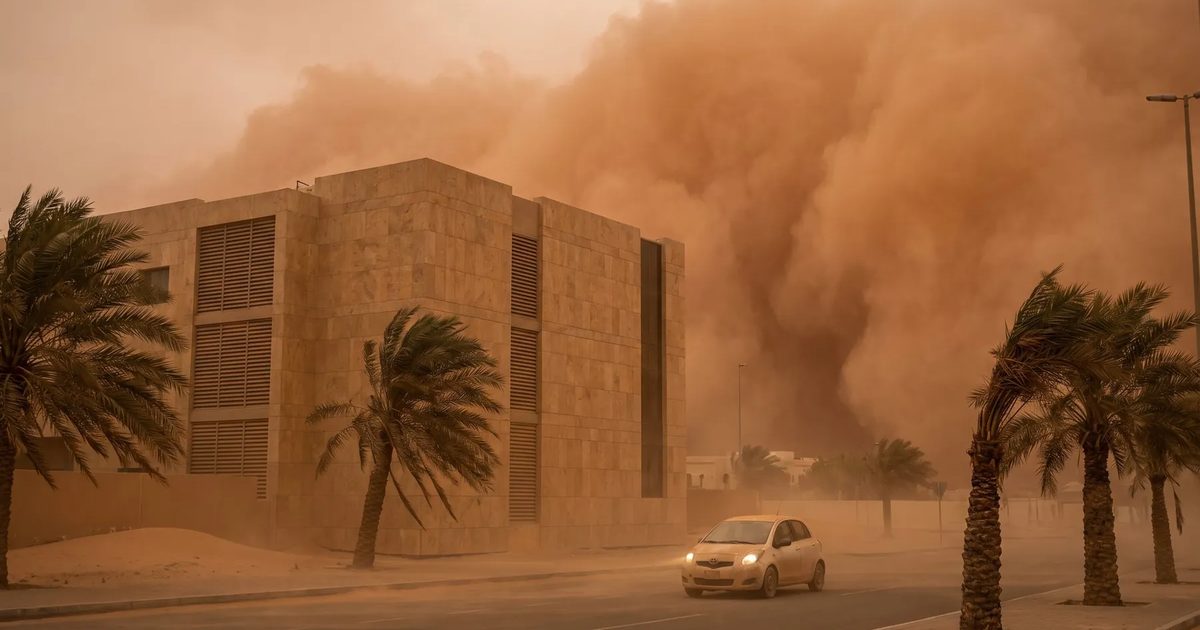
Ventilated façades need airflow to work. A Khamsin can fill the cavity and stop it. Here is why the detailing around intake and access matters.
How a ventilated façade cavity is supposed to work
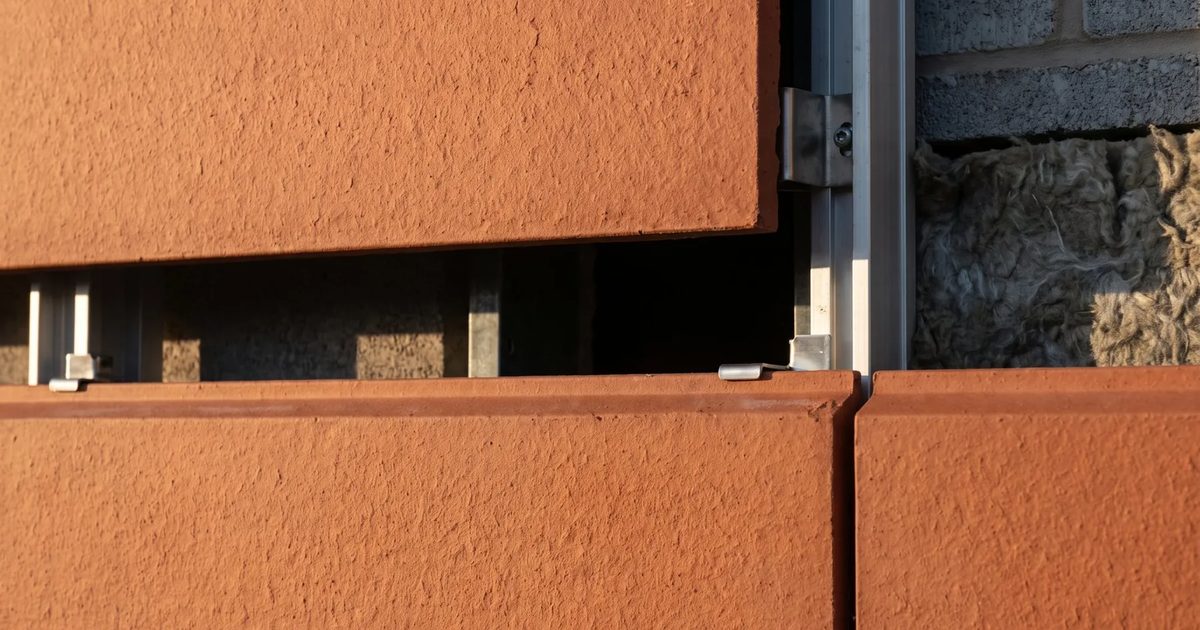
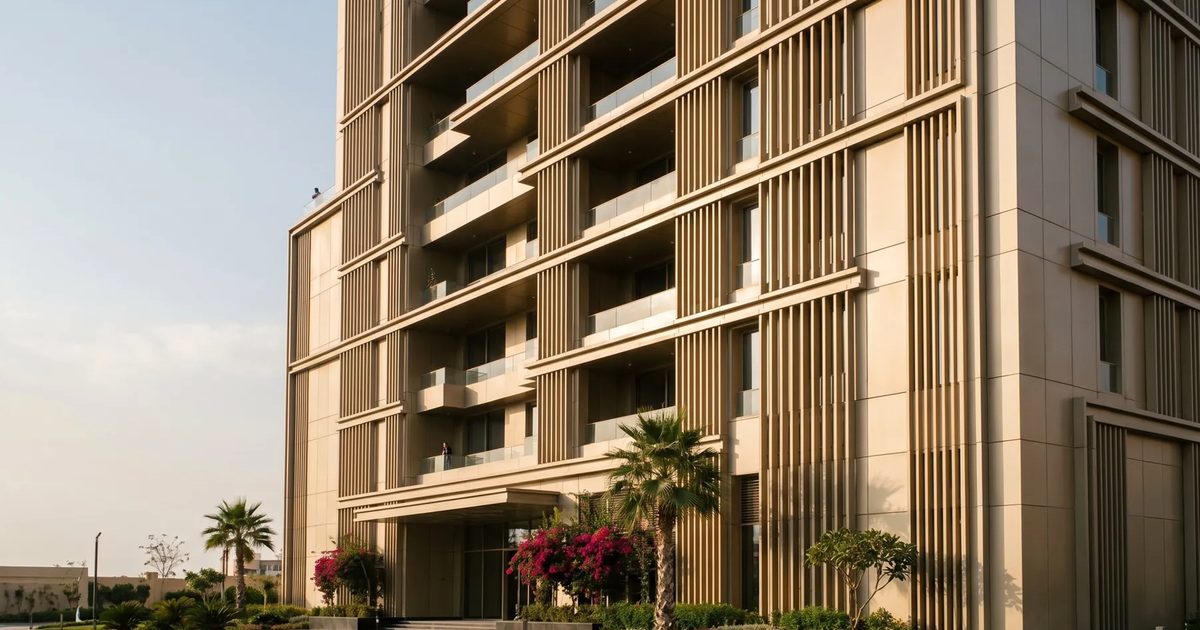
A ventilated façade is built as layers: an outer cladding panel, an air gap behind it, then insulation and the structural wall. The gap is not decorative. It exists so air can move through it, pulled by the difference in temperature between the outside and the space behind the panel. Warm air rises and exits near the top, drawing in cooler air from the bottom.
That movement is the whole point of the system. It carries away heat that would otherwise build up against the wall, and it lets any moisture that gets behind the cladding dry out instead of sitting there. If the air stops moving, the cavity stops doing the job it was designed for, even though the panels on the outside still look exactly the same.
What happens when sand gets into the gap
The same openings that let air in and out are the openings sand can use too. During a Khamsin, wind carries fine sand and dust at volumes that ordinary joints and vents are not built to filter. Some of it settles inside the cavity rather than passing through.
Once enough sand accumulates, it narrows or blocks the channel the air was moving through. The cavity can end up partly or fully sealed by the material it was meant to keep out. At that point the façade still stands and still looks fine from the street, but the mechanism behind the panels is no longer working as intended.
The design responses being studied
The work at EGY Green by Italy is focused on the points where sand actually gets in and where it accumulates, rather than on the panel finish. Four design elements are currently being studied for a Khamsin-prone context:
Filtered intake grilles at the base of the façade, to slow or block sand before it reaches the cavity. Shielded outlets at the top, so wind-driven sand cannot enter as easily from above. Cavity access points built into the system, so it can be opened for cleaning and inspection instead of relying only on what falls out on its own. Non-combustible cladding paired with cavity barriers, which addresses fire compartmentation inside the same gap that needs to stay clear for airflow.
Each of these targets a different stage: keeping sand out, and dealing with what still gets in despite that.
Why these are principles, not answers yet
It is worth being direct about where this work actually stands. These four elements are design principles that need to be validated through testing and through a monitored pilot installation. They are not yet proven on a built project.
That distinction matters because a façade detail that works on paper can behave differently once it sits in real wind, real dust loads, and real maintenance cycles over time. A monitored pilot is the way to find that out before the same detail gets specified across a full building. Until that testing is done, the honest description of these four points is 'being studied', not 'solved'.
What this means if you are specifying a façade in a sandy climate
If a ventilated façade is on your project in a region where Khamsin winds occur, the questions worth asking a supplier are less about the cladding finish and more about what happens inside the gap: how is the intake filtered, how is the outlet shielded, and can the cavity be opened for inspection without dismantling the panels.
The construction experience of the EGY Holding group in Italy shapes how these questions are being framed and tested, but it does not replace testing under local conditions. Sand behaves differently by region, by wind pattern, by building height. The answers that hold up will be the ones checked against that, not assumed from experience elsewhere.
If this is relevant to a project you are working on, the useful next step is simply to ask where the testing and pilot monitoring currently stand, and to expect a straight answer about what has been checked and what hasn't.
Back to the site